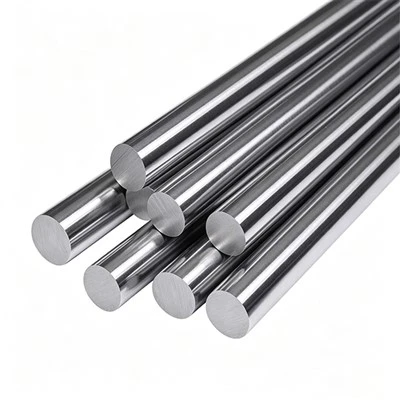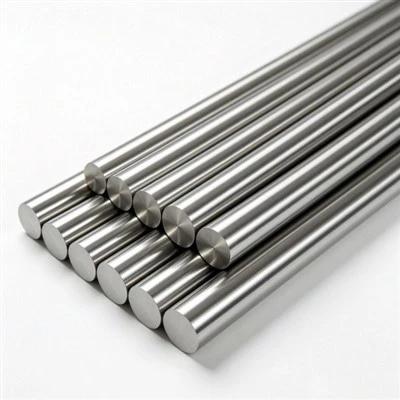


Medical Titanium Alloy Rod Description
Spinal fixation rods don't just sit inside a patient. They bend with every movement. They carry load until fusion happens. When fusion is delayed - which happens more often than surgeons would like - the rod becomes the primary load-bearing structure. That's when fatigue life stops being a specification and becomes a clinical outcome.
Gr23 Ti-6Al-4V ELI is the material behind most posterior spinal fixation rods. Not because it's the strongest titanium alloy available - it's not. Because it has the right combination of strength, fatigue resistance, and biocompatibility that regulatory bodies accept and surgeons trust.
Product Overview
Grade 23 is Ti-6Al-4V with interstitial elements held to tighter limits. Oxygen at 0.13% max, iron at 0.25% max. The result is better fracture toughness than commercial Grade 5 - typically 65-85 MPa√m versus 55-70 MPa√m. Higher fracture toughness means the rod can tolerate larger defects before cracking. That's a safety margin that matters when the rod is contoured in the OR and the surface gets worked.
ASTM F136 is the specification that defines this material for surgical implant applications. It covers the chemical composition, mechanical properties, and metallurgical requirements for wrought Ti-6Al-4V ELI alloy. If a rod doesn't carry ASTM F136 certification, it's not implant material.
|
Property |
Grade 23 ELI (ASTM F136) |
|
Tensile (min) |
860 MPa |
|
Yield (min) |
795 MPa |
|
Elongation |
≥10% |
|
Reduction of Area |
≥25% |
|
Density |
4.43 g/cm³ |
|
Modulus |
110 GPa |
Chemical Composition (ASTM F136, max limits)
|
Element |
Max % |
|
Oxygen |
0.13 |
|
Iron |
0.25 |
|
Carbon |
0.08 |
|
Nitrogen |
0.05 |
|
Hydrogen |
0.012 |
|
Aluminum |
5.5 – 6.5 |
|
Vanadium |
3.5 – 4.5 |
The oxygen cap is what separates Gr23 from commercial Grade 5. Lower oxygen means fewer inclusions. Fewer inclusions means fatigue cracks initiate later. For a rod that cycles millions of times in the spine, that difference is not theoretical.
Manufacturing Process - From Sponge to Spinal Rod
Every Spinal Fixation Medical Titanium Alloy Rod Gr23 follows a controlled production chain. Nothing gets skipped. The quality of the finished rod starts at the sponge and ends at the final inspection.
Titanium sponge. The starting point. Produced from rutile or ilmenite ore through the Kroll process. Sponge quality sets the ceiling for everything downstream. Chemistry starts here.
Pizza electrode. Sponge is pressed into disc shapes and welded into a consumable column. Electrode density and weld integrity affect arc stability during melting.
Smelting. Vacuum arc remelting. Often double or triple melt. The arc melts the electrode. Molten titanium drips into a water-cooled copper crucible. Impurities either vaporize or float out. Multiple melts reduce segregation and homogenize chemistry. For medical grade, triple VAR is standard.
Forging. The ingot gets hot deformed. This breaks up the cast structure. Closes porosity. Refines grain size. The alpha-beta structure starts to form here. Forging parameters - temperature, reduction ratio, cooling rate - determine the final microstructure. ATI recommends finish-forging from 954°C with a finishing temperature of 788°C, with reductions of 35% to obtain optimum properties.
Rod billet. The forged ingot is cut and conditioned into semi-finished bar. Surface defects are ground out before rolling.
Hot rolling. The billet goes through controlled temperature and reduction ratios. The goal is uniform deformation through the entire cross-section. Near-final diameter is achieved here.
Pickling. Acid bath removes the oxide scale formed during hot working. It also exposes surface defects so they can be caught before machining.
Machining. Turning or centerless grinding to final diameter. ISO 286-2 tolerance achieved. Straightness corrected.
Polishing. If the order calls for polished surface, final polishing follows. Polished rod has Ra ≤ 0.4μm, which reduces sites where fatigue cracks can initiate.
Every step carries the heat number forward. The rod in your hands traces back to a specific sponge batch. That's how Spinal Fixation Medical Titanium Alloy Rod Gr23 earns its paperwork.
Specifications and Standards
ASTM F136 covers the base material requirements. It specifies the chemistry, mechanical properties, and microstructure for Ti-6Al-4V ELI. The standard also requires ultrasonic inspection for larger diameter bar to detect internal defects that could become fatigue crack initiation sites.
Surface integrity is as important as chemistry. A retrieval analysis of clinically failed Ti-6Al-4V rods found that shot blasting and intraoperative contouring introduced surface defects that became crack initiation sites. Lordotic configurations show higher failure rates than kyphotic ones because the mean stress component shifts under cyclic load. This is why we control surface finish tightly. Polished rods with Ra ≤ 0.4μm reduce the number of sites where fatigue cracks can initiate.
|
Diameter |
Typical Use |
|
4.0mm |
Pediatric, cervical, small stature |
|
4.5mm |
Cervical, upper thoracic |
|
5.0mm |
Thoracic, lumbar (small) |
|
5.5mm |
Thoracolumbar (standard) |
|
6.0mm |
Lumbar, lumbosacral |
|
6.35mm |
Revision, multi-level |
|
7.0mm |
Severe deformity, heavy load |
|
8.0mm |
Pelvic fixation, custom |
Most posterior fixation systems use 5.5mm or 6.0mm rods. Pediatric and cervical cases use smaller diameters. Revision constructs or multi-rod configurations may use larger.
Inspection and Testing
Inspection is not a final step. It runs through the entire production chain.
Chemical composition. Each heat is tested for oxygen, nitrogen, carbon, hydrogen, iron, aluminum, and vanadium. ASTM E1409 for oxygen and nitrogen. ASTM E1941 for carbon. Results are documented per heat.
Mechanical properties. Tensile, yield, elongation, and reduction of area are tested per lot. The values must meet the minimums in ASTM F136.
Microstructure. Grade 23 ELI must meet A1–A9 requirements. Grain size is held at ASTM 6 or finer. Not tested on every lot, but available on request.
Ultrasonic inspection. ASTM F136 requires ultrasonic testing at final diameter for all centerless ground or peeled and polished bars greater than or equal to 0.375 inches (9.5mm) in diameter. This detects internal defects like voids or inclusions that could become fatigue crack initiation sites. Report ships with the material.
Surface inspection. Visual and dimensional checks for scratches, laps, seams, or scale. Surface defects are not cosmetic in spinal rods. They are fatigue initiation sites.


Documentation
Every lot ships with a Mill Test Report (MTR) documenting heat number, chemical analysis, and mechanical test results. The heat number traces back to the original titanium sponge melt.
EN 10204 3.1 is standard. 3.2 with third-party witness is available for OEMs pursuing FDA 510(k) or CE marking. SGS, BV, TÜV - your choice.
We can provide rod-level fatigue data or arrange third-party fatigue testing to your specific construct configuration.
For ISO 13485 quality systems, the documentation package links each finished rod to the specific material lot it was machined from. No gaps in the chain. If your auditor asks to see the material traceability for a specific production lot, you hand them the file.
Traceability
Spinal rods are Class II or III devices depending on indication. Full traceability is mandatory for regulatory submissions.
Traceability means each rod carries a heat number that links to the original titanium sponge. Batch records show melting, forging, and drawing history. If a problem surfaces later, the material can be traced and affected devices identified.
The FDA recognized ASTM F136 as a consensus standard for surgical implant applications. When you file with ASTM F136, the material certification we provide is part of your regulatory submission package.
Customization
Standard diameters run 4.0mm to 8.0mm. Lengths are typically 50mm to 600mm, but cut-to-length is standard - send a cut list and the rod arrives deburred and packaged.
Diameter tolerance follows ISO 286-2. For Swiss machining, h7 is common. For precision instruments, h6. Centerless ground is the default finish.
Surface finish options: polished (Ra ≤ 0.4μm) for fatigue-critical sections, shot-blasted for bone on-growth, or anodized for identification. If your process requires a specific surface, tell us.
Anodizing, passivation, and clean-room packaging are available on request.
Why Gr23 for Spinal Fixation
Grade 23 is Ti-6Al-4V with interstitial elements held to tighter limits. Oxygen at 0.13% max, iron at 0.25% max. The result is better fracture toughness than commercial Grade 5. Higher fracture toughness means the rod can tolerate larger defects before cracking. That's a safety margin that matters when the rod is contoured in the OR and the surface gets worked.
ASTM F136 is the specification that makes this material implant-grade. It requires ELI chemistry, specific mechanical testing, and full traceability. Regulators look for ASTM F136 on device submissions. If you're building a 510(k) or CE-marked product, you don't have a choice.
Gr5 commercial (ASTM B348) allows 0.20% oxygen. F136 allows 0.13%. That's not "close." That's two different materials. B348 won't pass regulatory submission for an implant. We don't go near that line.
FAQ
Q: What diameter rod should I use for a lumbar fusion construct?
A: 5.5mm or 6.0mm is standard for most lumbar and lumbosacral constructs. Smaller patients may need 5.0mm. Revision cases or multi-rod constructs may use 6.35mm or larger.
Q: What's the difference between Gr23 and Gr5 for spinal rods?
A: Gr23 has lower oxygen and iron limits. Higher fracture toughness. Better fatigue crack resistance. Gr5 commercial (ASTM B348) is not approved for implant use.
Q: Lead time?
A: Stock sizes 7-10 days. Custom diameters or lengths 15-35 days depending on quantity.
Q: Sample rod available?
A: Yes. 300mm sample. Pay shipping. Material free. Credit back on first production order over $10,000.
Contact
Need a quote on Spinal Fixation Medical Titanium Alloy Rod Gr23? Tell us diameter, length, quantity, surface finish, and any certification requirements. We'll reply within 24 hours.
Email: kristy@mt-titanium.com
WhatsApp: +86-17391509251
Hot Tags: spinal fixation medical titanium alloy rod gr23, China spinal fixation medical titanium alloy rod gr23 manufacturers, suppliers, factory, Dental Implant Titanium Core Rod, High Strength Medical Titanium Rod for Prosthetics, Medical Titanium Alloy Rods for Orthopedic Screws, medical titanium rod, Medical Titanium Rod ASTM F136 Spinal Fixation, Ti 6Al 4V ELI Medical Rod for Pediatric Orthopedics