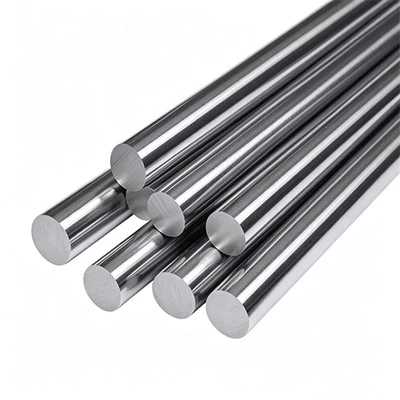


What it is
Orthopedic screws hold plates to bone. They hold rods in place. They fix fractures. Small screws for hand bones. Large screws for femurs.
Medical titanium alloy rods for orthopedic screws is the starting stock. Rod comes in. Screw machine cuts it. CNC swiss turns it. Threads get rolled. Heads get formed. Becomes a bone screw.
Cortical screws. Cancellous screws. Locking screws. Pedicle screws. Any screw that goes into bone.
Why Ti-6Al-4V ELI for screws
Stainless steel screws work. But stainless has problems.
| Feature | Ti-6Al-4V ELI | Stainless 316L |
| Tensile strength | 860-1000 MPa | 480-620 MPa |
| Density | 4.43 g/cm³ | 7.9 g/cm³ |
| Nickel content | 0% | 10-14% |
| MRI artifact | Minimal | Significant |
| Corrosion | None | Possible |
| Bone compatibility | Excellent (oxide layer) | Poorer |
Titanium is stronger by weight. No nickel. No MRI issues. Bone grows to it better.
For medical titanium alloy rods for orthopedic screws, Grade 23 ELI is the standard. ASTM F136. Medical implant grade.
Material specifications
ASTM F136 is the medical standard for Ti-6Al-4V ELI. ELI means Extra Low Interstitial. Lower oxygen. Lower iron. Higher toughness.
| Property | Value |
| Standard | ASTM F136 / ISO 5832-3 |
| UNS Number | R56401 |
| Common name | Grade 23 |
| Tensile (min) | 860 MPa |
| Yield (min) | 795 MPa |
| Elongation | ≥ 10% |
| Reduction of area | ≥ 25% |
| Density | 4.43 g/cm³ |
| Modulus | 110 GPa |
Chemical composition (max limits)
| Element | ASTM F136 |
| Oxygen | 0.13% |
| Iron | 0.25% |
| Carbon | 0.08% |
| Nitrogen | 0.05% |
| Hydrogen | 0.012% |
| Aluminum | 5.5 – 6.5% |
| Vanadium | 3.5 – 4.5% |
| Titanium | Balance |
Common diameters for orthopedic screws
| Diameter (mm) | Screw type | Typical application |
| 1.5 – 2.0 | Mini screws | Hand, foot, pediatric |
| 2.4 – 2.7 | Small fragment | Wrist, ankle, elbow |
| 3.5 | Medium fragment | Humerus, tibia, pelvis |
| 4.0 – 5.0 | Large fragment | Femur, tibia plate screws |
| 5.0 – 6.5 | Cancellous | Soft bone, metaphyseal |
| 6.5 – 8.0 | Pedicle | Spine |
Length range for rods: 1000mm to 3000mm straight. Spools available for high-volume screw machining.
Why rod quality matters for screw manufacturing
Screw machining is high speed. Swiss lathes running 24/7. Rod feeds through guide bushing. If the rod varies in diameter, the machine jams. If the rod is bent, it won't feed.
For medical titanium alloy rods for orthopedic screws, consistency is everything.
| Requirement | Typical tolerance |
| Diameter tolerance | ±0.025mm |
| Straightness | 0.2mm per 1000mm |
| Surface finish | Ra ≤ 0.2μm |
| Roundness | Within 50% of diameter tolerance |
We hold these tolerances. Every lot gets measured. Data goes with shipment.
Surface finish for screw blanks
Screw blanks need smooth surface. Rough rod wears out cutting tools faster. Polished rod extends tool life.
| Finish | Ra | Best for |
| Polished | ≤ 0.2μm | High-speed Swiss machining |
| Ground | ≤ 0.4μm | General turning |
| Centerless ground | ≤ 0.1μm | Precision small diameter (<3mm) |
For medical titanium alloy rods for orthopedic screws, polished is standard. Ground for smaller diameters.
No oxide layer. No drawing lubricant residue. Clean. Ready to run.
Screw manufacturing process
Rod arrives at screw manufacturer. Swiss lathe feeds the rod. Cuts the blank. Turns the profile. Drills the cannulation if needed.
Then thread rolling. Not cutting. Rolling compresses the threads. Increases fatigue strength. Better than cut threads.
Head forming. Hexalobular. Phillips. Hex drive. Torx. Crimping for locking screws.
Passivation. ASTM F86. Removes free iron. Restores oxide layer.
Final cleaning. Packaging. Sterilization.
Every screw starts with good rod. Medical titanium alloy rods for orthopedic screws gives you that starting point.
Thread rolling vs thread cutting
Thread rolling is standard for high-strength orthopedic screws.
| Method | Fatigue life | Surface finish | Material waste |
| Rolling | Excellent | Smooth | None |
| Cutting | Good | Rougher | 20-30% waste |
Rolling requires consistent rod diameter. Too small, the thread is undersized. Too large, the die jams.
Our rod holds ±0.025mm. That's tight enough for thread rolling without adjustment.
Cannulated screws
Some screws are hollow. K-wire goes through the middle. Cannulated screws need a hole down the center.
Starting rod must be straight. Cannulation drilling is precise. Bent rod causes the drill to walk.
For medical titanium alloy rods for orthopedic screws used in cannulated screws, we supply extra straightness. 0.1mm per 1000mm. Available on request.
Traceability
Orthopedic screws are medical devices. Class II. Full traceability required.
Every medical titanium alloy rods for orthopedic screws comes with:
| Document | Provided |
| Heat number | Yes |
| Mill test report | Yes |
| ASTM F136 cert | Yes |
| Chemical analysis | Yes |
| Mechanical test results | Yes |
| Diameter certification | Yes |
EN 10204 3.1 standard. 3.2 available with third-party witness.
We keep samples from every heat.
FAQ
Q: Grade 23 ELI or Grade 5 for screws?
A: Grade 23 ELI. ASTM F136. Regular Grade 5 (ASTM B348) is not approved for surgical implants. ELI has better fatigue life.
Q: What diameter rod for a 3.5mm screw?
A: 3.5mm screw is usually machined from 4.0mm to 4.5mm rod. Depends on head design and thread rolling requirements. Tell us your screw size. We'll recommend rod diameter.
Q: Polished or ground for Swiss machining?
A: Polished. Ra ≤ 0.2μm. Feeds smoother. Longer tool life.
Q: Do you supply rod in coils for Swiss lathes?
A: Yes. Coils up to 10kg. Spools available. Coils run longer without stopping. Check your machine's coil feed capacity.
Q: What about centerless grinding for small diameters?
A: For rods under 3mm, centerless grinding gives better roundness and surface finish. Available on request. Adds 3-5 days.
Q: Lead time?
A:
| Order type | Lead time |
| Stock diameters (2.0mm – 6.0mm) | 7-10 days |
| Non-stock sizes | 3-5 weeks |
| Centerless ground | Add 3-5 days |
Q: Sample rod for screw qualification?
A: Yes. 1 meter sample. Pay material and shipping. Credit back on first production order over $10,000.
Q: Packaging for clean room?
A: Straight lengths in individual plastic sleeves or tubes. Coils on clean spools sealed in anti-static bags. Labels show heat number, diameter, lot number, ASTM F136.
The bottom line
Orthopedic screws need strong, consistent rod. Every screw starts here.
Medical titanium alloy rods for orthopedic screws gives you:
| Feature | Benefit |
| Grade 23 ELI | High strength, good fatigue life |
| ASTM F136 | Medical implant standard |
| ±0.025mm tolerance | Jam-free Swiss machining |
| Polished surface | Longer tool life |
| Full traceability | Audit ready |
From 1.5mm mini screws to 8.0mm pedicle screws. For cortical, cancellous, locking, or cannulated.
Contact
Need a quote on high strength cannulated titanium bar for trauma surgery? Tell us outer diameter, inner diameter, length, quantity. We'll reply within 24 hours.
Email: shawn@mt-titanium.com
WhatsApp: +86-18220745501
Hot Tags: medical titanium alloy rods for orthopedic screws, China medical titanium alloy rods for orthopedic screws manufacturers, suppliers, factory, Biocompatible Titanium Rod for Surgical Implants, Dental Implant Titanium Core Rod, High Strength Medical Titanium Rod for Prosthetics, medical titanium rod, Medical Titanium Rod ASTM F136 Spinal Fixation, Ti 6Al 4V ELI Medical Rod for Pediatric Orthopedics