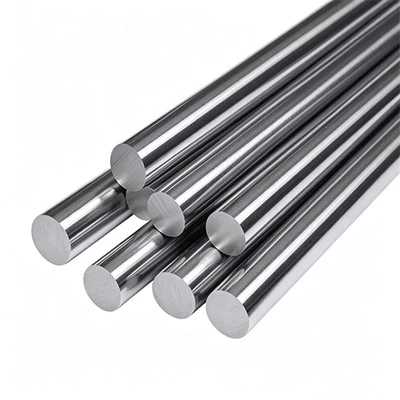


What it is
Surgical implants go into the human body. They stay there for years. Sometimes forever. The material has to be safe. No toxic reactions. No corrosion. No long-term issues.
Biocompatible titanium rod for surgical implants is made for that purpose. Not commercial grade. Not industrial. Medical grade. Tested. Certified. Traceable.
Bone screws. Spinal rods. Intramedullary nails. Dental implants. External fixator pins. Any implant that needs a strong, safe rod.
What biocompatible means
A material is biocompatible if the body accepts it. No rejection. No inflammation. No toxic reaction.
Titanium meets that definition. The body forms an oxide layer on the surface. That layer is inert. The body doesn't attack it. Bone grows right up to it.
Some materials claim biocompatibility. Stainless steel is tolerated. But stainless has nickel. Cobalt chrome has cobalt and chromium. Titanium has neither.
For biocompatible titanium rod for surgical implants, the track record is decades long. Millions of implants. No safety issues.
Why titanium wins for implants
| Feature | Titanium | Stainless | Cobalt Chrome |
| Nickel content | 0% | 10-14% | 0-1% |
| MRI artifact | Minimal | Significant | Moderate |
| Density (g/cm³) | 4.4-4.5 | 7.9 | 8.3 |
| Modulus (GPa) | 110 | 200 | 230 |
| Bone integration | Excellent | Poor | Poor |
| Corrosion | None | Possible | Rare |
Titanium's modulus is closer to bone. Less stress shielding. The bone stays stronger.
For biocompatible titanium rod for surgical implants, the choice is clear for most applications.
Which grade for which implant
Three medical grades. Different strength. Different applications.
| Grade | Material | Tensile | Best for |
| Grade 2 CP | Pure titanium | 345 MPa | Low stress. Cranium, maxillofacial. |
| Grade 4 CP | Pure titanium | 550 MPa | Medium stress. Foot, ankle, hand. |
| Grade 23 ELI | Ti-6Al-4V | 860 MPa | High stress. Spine, trauma, long bones. |
Grade 2 is the softest. Most formable. Used for skull plates and face reconstruction. The surgeon can bend it by hand.
Grade 4 is stronger. Still pure titanium. Used for foot fractures and low-stress orthopedics.
Grade 23 ELI is the workhorse. Highest strength. Used for femur, tibia, humerus. Spine fixation. Load-bearing trauma.
Different implants need different strength. A cranial rod holds a bone flap in place. No weight bearing. A femoral rod carries body weight. Choose the right grade.
Material specifications
Grade 23 ELI (ASTM F136)
| Property | Value |
| Tensile (min) | 860 MPa |
| Yield (min) | 795 MPa |
| Elongation | ≥ 10% |
| Density | 4.43 g/cm³ |
| Modulus | 110 GPa |
Grade 4 CP (ASTM F67)
| Property | Value |
| Tensile (min) | 550 MPa |
| Yield (min) | 483 MPa |
| Elongation | ≥ 15% |
| Density | 4.51 g/cm³ |
Grade 2 CP (ASTM F67)
| Property | Value |
| Tensile (min) | 345 MPa |
| Yield (min) | 275 MPa |
| Elongation | ≥ 20% |
| Density | 4.51 g/cm³ |
Chemical limits (Grade 23 ELI)
| Element | Max limit |
| Oxygen | 0.13% |
| Iron | 0.25% |
| Carbon | 0.08% |
| Nitrogen | 0.05% |
| Hydrogen | 0.012% |
| Aluminum | 5.5 – 6.5% |
| Vanadium | 3.5 – 4.5% |
ELI (Extra Low Interstitial) means lower oxygen and iron than commercial Grade 5. That means higher toughness. Better fatigue life. Safer for long-term implants.
Common diameters for surgical implants
| Diameter (mm) | Implant type | Typical application |
| 1.0 – 2.0 | Mini screws, K-wires | Hand, foot, pediatric |
| 2.0 – 3.5 | Small screws | Wrist, ankle, elbow |
| 3.5 – 5.0 | Cortical screws | Humerus, tibia, pelvis |
| 5.0 – 6.5 | Cancellous screws | Soft bone, metaphyseal |
| 6.5 – 8.0 | Pedicle screws | Spine |
| 8.0 – 11.0 | Intramedullary nails | Tibia |
| 11.0 – 15.0 | Intramedullary nails | Femur |
| 15.0 – 25.0 | External fixator pins | Trauma, limb lengthening |
Length: 500mm to 3000mm. Longer lengths available on request.
Surface finish for implants
Implant surface affects tissue response. Smooth surfaces cause less irritation.
| Finish | Ra | Best for |
| Polished | ≤ 0.2μm | Standard for most implants |
| Ground | ≤ 0.4μm | General use |
| Centerless ground | ≤ 0.1μm | Precision small diameter |
For biocompatible titanium rod for surgical implants, polished is standard. No surface contamination. No residual lubricants. Ready for clean room.
Why surface quality matters
A scratch on a rod becomes a stress riser. Stress risers lead to cracks. Cracks lead to implant failure.
Biocompatible means no defects that could cause failure.
| Surface defect | Maximum allowed |
| Scratches (depth) | < 0.01mm |
| Pits | None |
| Embedded particles | None |
| Oxide color | Silver or straw only |
We inspect every lot. Surface finish report available.
Fatigue life for load-bearing implants
Spinal rods. Intramedullary nails. External fixator pins. These implants cycle. Patient walks. Moves. The rod sees millions of cycles.
ASTM F136 requires fatigue testing for medical grade. We provide fatigue data.
| Stress level | Cycles to failure (typical) |
| 500 MPa | > 10 million |
| 600 MPa | 5-10 million |
| 700 MPa | 1-5 million |
ELI chemistry improves fatigue life. Lower oxygen means fewer crack initiation sites.
Traceability
Surgical implants are medical devices. Class II or III. Audits happen. Paperwork matters.
Every biocompatible titanium rod for surgical implants comes with:
| Document | Provided |
| Heat number | Yes |
| Mill test report | Yes |
| ASTM F136 or F67 cert | Yes |
| Chemical analysis | Yes |
| Mechanical test results | Yes |
| Surface finish report | Upon request |
EN 10204 3.1 standard. 3.2 available with third-party witness.
We retain samples from every heat.
Machining into implants
Rod arrives at implant manufacturer. CNC lathe or Swiss machine cuts the blank. Turns the profile. Drills cannulation if needed. Cuts threads. Forms the head.
For biocompatible titanium rod for surgical implants, the rod needs consistent diameter. ±0.025mm tolerance. No surface defects. No contamination.
We supply rod ready for your machining center. No prep needed.
FAQ
Q: Grade 23 ELI or Grade 4 for spinal rods?
A: Grade 23 ELI. Spine rods need high strength and good fatigue life. Grade 4 is 550 MPa. Too weak.
Q: Grade 2 or Grade 4 for cranial implants?
A: Grade 2. Cranium doesn't bear weight. Grade 2 is easier to contour. Grade 4 is overkill.
Q: Polished or ground for screw blanks?
A: Polished. Ra ≤ 0.2μm. Extends tool life. Better surface on finished screw.
Q: What about centerless ground for small diameters?
A: For rods under 3mm, centerless grinding gives better roundness. Available on request.
Q: Do you supply rod in coils for high-volume screw production?
A: Yes. Coils up to 15kg. Spools available. Coils run longer without stopping.
Q: Lead time?
A:
| Order type | Lead time |
| Stock diameters (2.0mm – 12.0mm) | 7-10 days |
| Non-stock sizes | 3-5 weeks |
| Centerless ground | Add 3-5 days |
Q: Sample rod for qualification?
A: Yes. 500mm sample. Pay material and shipping. Credit back on first production order over $10,000.
Q: Packaging for clean room?
A: Straight lengths in individual plastic sleeves or sealed tubes. Coils on clean spools in anti-static bags. Labels show material, diameter, heat number, lot number, ASTM spec.
The bottom line
Surgical implants need safe, strong, reliable material. The body has to accept it. The implant has to last.
Biocompatible titanium rod for surgical implants delivers that.
| Feature | Benefit |
| Medical grade | ASTM F136 or F67 |
| ELI chemistry | Higher toughness, better fatigue life |
| No nickel | No allergic reactions |
| Polished surface | Smooth, clean, ready to machine |
| Full traceability | Audit ready |
Grade 2 for cranial and low stress. Grade 4 for foot and medium stress. Grade 23 ELI for spine and load-bearing trauma.
From mini screws to femoral nails. From dental implants to external fixators.
Contact
Need a quote on biocompatible titanium rod for surgical implants? Tell us grade, diameter, length, quantity, and any surface finish requirements. We'll reply within 24 hours.
Email: shawn@mt-titanium.com
WhatsApp: +86-18220745501
Hot Tags: biocompatible titanium rod for surgical implants, China biocompatible titanium rod for surgical implants manufacturers, suppliers, factory, Dental Implant Titanium Core Rod, medical titanium rod, Medical Titanium Rod ASTM F136 Spinal Fixation, Ti 6Al 4V ELI Medical Rod for Pediatric Orthopedics, Titanium Alloy Rods Comply With The ASTM F67 Standard, Trauma Surgery Support Titanium Rod Medical Grade