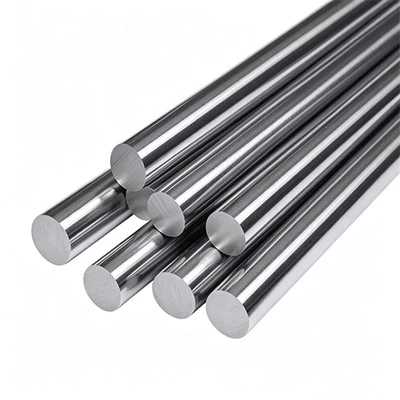


What it is
Prosthetics replace missing limbs. Lower leg. Upper leg. Arm. The patient wears it every day. All day. The frame has to be strong. Light. Safe against skin.
High strength medical titanium rod for prosthetics is the backbone of modern prosthetic limbs. Pylon tubes. Adaptors. Connectors. Knee shafts. Ankle joints.
Not aluminum. Not steel. Titanium. Stronger than aluminum by weight. Lighter than steel. No corrosion. No skin reactions.
Why titanium for prosthetics
Aluminum is light. 2.7 g/cm³. But aluminum is soft. It dents. It scratches. It can fatigue crack over time.
Steel is strong. 7.9 g/cm³. But steel is heavy. The patient feels every gram. Lift a steel leg all day. It's tiring.
Titanium sits in the middle. 4.4 g/cm³. Strong as steel. Half the weight.
| Material | Density (g/cm³) | Tensile (MPa) | Strength/weight | Corrosion | Skin contact |
| 6061 Aluminum | 2.7 | 310 | Low | Poor | Can oxidize |
| 316L Stainless | 7.9 | 580 | Medium | Fair | Contains nickel |
| Ti-6Al-4V ELI | 4.4 | 860 | High | Excellent | Biocompatible |
For high strength medical titanium rod for prosthetics, the choice is clear. Strong. Light. Safe.
What the spec says
ASTM F136 is the medical standard for Ti-6Al-4V ELI. ELI means Extra Low Interstitial. Lower oxygen. Lower iron. Higher toughness than commercial Grade 5.
| Property | Value |
| Standard | ASTM F136 / ISO 5832-3 |
| UNS Number | R56401 |
| Common name | Grade 23 |
| Tensile (min) | 860 MPa |
| Yield (min) | 795 MPa |
| Elongation | ≥ 10% |
| Density | 4.43 g/cm³ |
| Modulus | 110 GPa |
Chemical composition (max limits)
| Element | ASTM F136 |
| Oxygen | 0.13% |
| Iron | 0.25% |
| Carbon | 0.08% |
| Nitrogen | 0.05% |
| Hydrogen | 0.012% |
| Aluminum | 5.5 – 6.5% |
| Vanadium | 3.5 – 4.5% |
| Titanium | Balance |
Common diameters for prosthetic components
| Diameter (mm) | Component | Typical use |
| 4.0 – 6.0 | Small adaptors | Wrist units, ankle joints |
| 8.0 – 10.0 | Tube clamps | Connecting pylon to foot |
| 12.0 – 14.0 | Lower leg pylon | Transtibial prosthetics |
| 14.0 – 16.0 | Upper leg pylon | Transfemoral prosthetics |
| 16.0 – 20.0 | Knee shafts | Heavy duty, active users |
| 20.0 – 25.0 | Custom adaptors | High load, special designs |
Length: 500mm to 2000mm. Custom lengths available.
Where it goes
Lower leg pylon. The tube from the socket to the foot. Takes the patient's full weight with every step. Needs high strength. Needs to be light. 12mm to 14mm diameter. Polished surface.
Upper leg pylon. Longer tube from hip or knee to foot. Higher bending moment. Larger diameter. 14mm to 16mm.
Knee shaft. Connects the knee joint to the pylon. High cyclic load. Needs good fatigue life. Grade 23 ELI handles millions of cycles.
Ankle adaptor. Small part. High stress. 4mm to 8mm diameter. Machined from rod.
Wrist unit. Upper extremity prosthetics. Smaller loads. Still needs strength. 6mm to 10mm diameter.
For high strength medical titanium rod for prosthetics, every component sees daily use. Walking. Standing. Lifting. The rod has to last years.
Fatigue life - critical for prosthetics
A lower leg amputee takes 3,000 to 5,000 steps per day. That's 1-2 million steps per year. The pylon sees that many load cycles.
| Activity | Cycles per year (approx) |
| Walking (average) | 1.5 million |
| Active user | 2-3 million |
| Runner | 5 million+ |
ASTM F136 requires fatigue testing. We provide fatigue data.
| Stress level | Cycles to failure (typical) |
| 500 MPa | > 10 million |
| 600 MPa | 5-10 million |
For high strength medical titanium rod for prosthetics, fatigue life is not academic. It's how long the patient can use the leg safely.
Surface finish for skin contact
Prosthetic rods contact skin. They contact clothing. They get handled every day.
| Finish | Ra | Best for |
| Polished | ≤ 0.2μm | Skin contact, cosmetic finish |
| Ground | ≤ 0.4μm | Internal components |
| Brushed | ≤ 0.8μm | Non-skin contact |
Polished is most common for external components. Smooth. Easy to clean. Won't snag clothing. Won't irritate skin.
For high strength medical titanium rod for prosthetics, we supply polished as standard. Bright finish. Looks professional. Patients prefer it.
Why surface defects matter in prosthetics
A scratch on a pylon is visible. Patient sees it every day. Not acceptable for a cosmetic device.
A scratch also creates a stress riser. Under daily walking loads, cracks can start at scratches.
| Surface requirement | Standard |
| No visible scratches | Pass |
| No pits | Pass |
| No embedded particles | Pass |
| Consistent finish | Pass |
We inspect every rod. Surface finish report available.
Machining prosthetic components
Prosthetic shops machine titanium every day. Knee adaptors. Ankle joints. Tube clamps.
For high strength medical titanium rod for prosthetics, the rod needs to be straight. Consistent diameter. No surface defects.
| Machining recommendation | Value |
| Cutting speed | 30-60 m/min |
| Feed rate | 0.05-0.15 mm/rev |
| Tool material | Carbide |
| Coolant | Flood |
Grade 23 ELI machines like any titanium. Slow speeds. Sharp tools. Don't let the tool rub.
Tube clamps and compression fittings
Prosthetic pylons are often held by tube clamps. Clamp around the rod. Holds the foot or knee.
The rod needs consistent diameter. Clamps are designed for a specific OD. Too small, the clamp won't hold. Too large, the clamp won't fit.
| Diameter tolerance | Standard |
| Standard | ±0.05mm |
| Precision (for clamps) | ±0.025mm |
For high strength medical titanium rod for prosthetics, we hold ±0.05mm standard. Tighter on request.
Weight savings calculation
A prosthetic leg weighs 2-4 kg total. Every gram matters to the patient.
Replace steel with titanium. Save 40-45% weight per component.
| Component | Steel weight | Titanium weight | Savings |
| Lower leg pylon (300mm x 14mm) | 380g | 205g | 175g |
| Knee adaptor | 150g | 85g | 65g |
| Ankle joint | 200g | 110g | 90g |
Total savings per leg: 300-500 grams. Patient notices the difference at the end of the day.
Traceability
Prosthetic components are medical devices. Class I or II. Traceability required.
Every high strength medical titanium rod for prosthetics comes with:
| Document | Provided |
| Heat number | Yes |
| Mill test report | Yes |
| ASTM F136 cert | Yes |
| Chemical analysis | Yes |
| Mechanical test results | Yes |
EN 10204 3.1 standard. 3.2 available with third-party witness.
FAQ
Q: Grade 23 ELI or Grade 5 for prosthetic pylons?
A: Grade 23 ELI. ASTM F136. Medical grade. Regular Grade 5 is commercial. ELI has better fatigue life.
Q: What diameter for a lower leg pylon
A: 12mm to 14mm. Most common is 14mm. Strong enough for average adult. 16mm for heavy duty.
Q: What diameter for a upper leg pylon?
A: 14mm to 16mm. Longer length means higher bending moment. Larger diameter needed.
Q: Polished or ground for external components?
A: Polished. Ra ≤ 0.2μm. Better cosmetic appearance. Smoother against skin.
Q: Can you supply cut-to-length rods for specific prosthetic components?
A: Yes. Send your lengths. We cut, deburr, clean, and pack. No extra charge under 50 pieces.
Q: Lead time?
A:
| Order type | Lead time |
| Stock diameters (10mm – 16mm) | 7-10 days |
| Non-stock sizes | 3-5 weeks |
Q: Sample rod for testing?
A: Yes. 500mm sample. Pay material and shipping. Credit back on first production order over $10,000.
Q: Packaging?
A: Individual plastic sleeves or sealed tubes. Labels show material, diameter, length, heat number, ASTM F136.
The bottom line
Prosthetics need high strength. Low weight. Biocompatible materials. The patient wears it every day.
High strength medical titanium rod for prosthetics delivers that.
| Feature | Benefit |
| Grade 23 ELI | 860 MPa tensile, high fatigue life |
| ASTM F136 | Medical implant standard |
| 4.4 g/cm³ | Half the weight of steel |
| Polished surface | Smooth, cosmetic, skin safe |
| ±0.05mm tolerance | Fits tube clamps perfectly |
For lower leg pylons. For upper leg shafts. For knee adaptors. For ankle joints.
Strong enough for active users. Light enough for daily wear.
Contact
Need a quote on high strength medical titanium rod for prosthetics? Tell us diameter, length, quantity, and any surface finish requirements. We'll reply within 24 hours.
Email: shawn@mt-titanium.com
WhatsApp: +86-18220745501
Hot Tags: high strength medical titanium rod for prosthetics, China high strength medical titanium rod for prosthetics manufacturers, suppliers, factory, Biocompatible Titanium Rod for Surgical Implants, Dental Implant Titanium Core Rod, High Strength Medical Titanium Rod for Prosthetics, medical titanium rod, Ti 6Al 4V ELI Medical Rod for Pediatric Orthopedics, Titanium Alloy Rods Comply With The ASTM F67 Standard