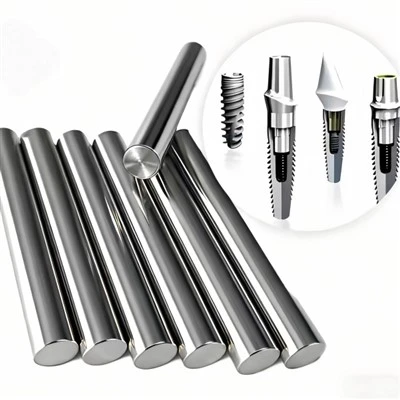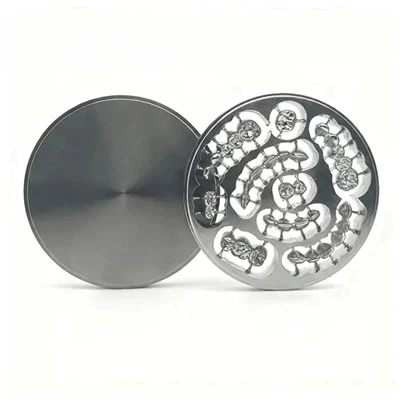


What it is
Orthopedic plates hold bone. Dentistry fixtures go into the jaw. Different fields. Same material. Same standard.
Titanium orthopedic plate dentistry implant fixture ASTM F67 is pure titanium. Grade 4 CP. No aluminum. No vanadium. No nickel.
ASTM F67 is the medical standard for unalloyed titanium. Used for cranial plates. Used for dental healing abutments. Used for bone screws that don't need high strength.
One standard. Many applications.
Why ASTM F67
ASTM F136 (Ti-6Al-4V) is stronger. But not every implant needs that strength.
ASTM F67 covers pure titanium. Grade 1, 2, 3, 4. Grade 4 is the strongest of the pure grades. 550 MPa tensile. Plenty for cranial plates. Plenty for dental abutments. Plenty for foot screws.
No aluminum. No vanadium. Some surgeons prefer pure titanium for certain applications. Skull. Face. Healing components.
For titanium orthopedic plate dentistry implant fixture ASTM F67, the standard guarantees purity and biocompatibility.
Which grade for which application
| Grade | Tensile | Best for |
| Grade 4 CP | 550 MPa | Orthopedic plates, dental fixtures, cranial |
| Grade 2 CP | 345 MPa | Dental mesh, low-stress plates |
| Grade 1 CP | 240 MPa | Orthodontic wires, cerclage |
Grade 4 is the most common for plates and fixtures. Strongest of the pure titanium grades. Still formable. Still biocompatible.
Grade 2 for thinner mesh and lower stress. Grade 1 for wire.
For titanium orthopedic plate dentistry implant fixture ASTM F67, Grade 4 is the workhorse.
Material specs (Grade 4 CP, ASTM F67)
| Property | Value |
| Standard | ASTM F67 |
| Tensile (min) | 550 MPa |
| Yield (min) | 483 MPa |
| Elongation | ≥ 15% |
| Density | 4.51 g/cm³ |
| Purity | ≥98.8% |
Chemical limits
| Element | Max |
| Oxygen | 0.40% |
| Iron | 0.50% |
| Carbon | 0.08% |
| Nitrogen | 0.05% |
| Hydrogen | 0.012% |
| Titanium | Balance |
No aluminum. No vanadium. No nickel.
Orthopedic plate applications
Cranial plate. Skull defect after trauma or tumor. Plate is cut to shape. Contoured to the skull. Screws hold it in place. Grade 4 CP. 0.5mm to 1.0mm thick.
Maxillofacial plate. Facial bones. Orbital floor. Zygoma. Thin plate. 0.4mm to 0.6mm. Contoured during surgery.
Foot plate. Metatarsal fracture. 1.0mm to 1.5mm thick. Grade 4 CP. Strong enough for foot. Not load-bearing like femur.
Hand plate. Phalanx fracture. 0.6mm to 1.0mm. Small screws. Low profile.
For titanium orthopedic plate dentistry implant fixture ASTM F67, pure titanium is standard for these applications.
Dentistry implant fixture applications
Dental healing abutment. Placed on top of the implant fixture. Shapes the gum during healing. Removed later. Temporary. Grade 4 CP. Machined from plate or rod.
Dental mesh. Bone graft support. Thin plate. 0.3mm to 0.6mm. Laser cut. Bent to fit the jaw. Grade 2 or Grade 4.
Temporary abutment. Not load-bearing. Used during prosthetic fabrication. Grade 4 CP. Lower cost than Grade 23 ELI.
Laboratory analog. Replica of implant in stone model. Grade 4 CP. Machined from small plate stock.
For titanium orthopedic plate dentistry implant fixture ASTM F67, pure titanium is chosen for temporary components and non-load-bearing parts.
Why not Ti-6Al-4V for these applications
Ti-6Al-4V (Grade 23 ELI) is stronger. 860 MPa vs 550 MPa. But it costs more. It's harder to machine. It contains aluminum and vanadium.
For cranial plates, strength is not the main need. The skull doesn't bear weight. Pure titanium is easier to contour. The surgeon can bend it by hand.
For healing abutments, they are temporary. Pure titanium works fine. Lower cost.
For titanium orthopedic plate dentistry implant fixture ASTM F67, pure titanium is the right choice for these specific applications.
Surface finish
Pure titanium plates contact tissue. Surface finish affects healing.
| Finish | Ra | Application |
| Polished | ≤ 0.2μm | Standard for plates |
| Sandblasted | 1.0-2.0μm | Bone contact surface |
| Acid etched | 0.5-1.0μm | Osseointegration |
| Anodized | Color | Identification |
For cranial plates, polished is standard. For dental mesh, polished is fine. For bone contact, sandblasted or etched promotes growth.
We supply polished plate. You add surface treatment.
Plate thickness guide
| Application | Thickness | Width |
| Cranial plate | 0.5 – 1.0mm | 5 – 30mm |
| Maxillofacial plate | 0.4 – 0.6mm | 4 – 10mm |
| Foot plate | 1.0 – 1.5mm | 6 – 12mm |
| Hand plate | 0.6 – 1.0mm | 4 – 8mm |
| Dental mesh | 0.3 – 0.6mm | 5 – 20mm |
| Healing abutment blank | 2.0 – 5.0mm | 5 – 15mm |
Forming and contouring
Pure titanium is formable. Grade 4 can be bent with pliers. Grade 2 is softer. Grade 1 is very soft.
For titanium orthopedic plate dentistry implant fixture ASTM F67, the plate arrives flat. The surgeon bends it to fit the bone. Contouring is done in the OR or lab.
No heating needed. Cold bend. The plate stays bent. Little springback.
Cutting plate shapes
Plates start as flat stock. Laser cut to shape. Waterjet also works. Laser is cleaner. Smaller kerf. Less burr.
For titanium orthopedic plate dentistry implant fixture ASTM F67, we supply flat plates or cut shapes. Send DXF or DWG. We laser cut. Deburr. Passivate. Pack.
Screw holes
Plates need holes for screws. Drilled after cutting. Countersunk for flat head screws. Tapered for locking screws.
We supply blank plate without holes. You drill. Or we drill to your print.
Traceability
ASTM F67 is a medical standard. Full traceability required.
Every titanium orthopedic plate dentistry implant fixture ASTM F67 comes with:
Heat number. Mill test report. ASTM F67 cert. Chemical analysis. Mechanical test results.
EN 10204 3.1 standard. 3.2 available.
FAQ
Q: Grade 4 CP or Grade 23 ELI for cranial plate?
A: Grade 4 CP. Cranial plate doesn't bear weight. Pure titanium is preferred. No aluminum. No vanadium.
Q: Grade 4 CP or Grade 23 ELI for healing abutment?
A: Grade 4 CP. Healing abutments are temporary. Lower cost. Pure titanium works fine.
Q: What thickness for a foot plate?
A: 1.0mm to 1.5mm. Foot takes weight but less than femur. 1.2mm is common.
Q: What thickness for dental mesh?
A: 0.3mm to 0.6mm. Thin mesh bends easily. Laser cut.
Q: Can you pre-contour plates?
A: Yes. Send a 3D model or STL file. We pre-bend to match the bone surface.
The bottom line
Not every implant needs high-strength alloy. Some need pure titanium.
Titanium orthopedic plate dentistry implant fixture ASTM F67 gives you that.
Grade 4 CP. ASTM F67. 550 MPa tensile. No aluminum. No vanadium. No nickel.
For cranial plates. For healing abutments. For foot and hand plates. For dental mesh.
Pure titanium. Formable. Biocompatible. Traceable.
Contact
Need a quote on titanium orthopedic plate dentistry implant fixture ASTM F67? Tell us the application, thickness, width, length, quantity, and any cut shape requirements. We'll reply within 24 hours.
Email: kristy@mt-titanium.com
WhatsApp: +86-17391509251
Hot Tags: titanium orthopedic plate dentistry implant fixture astm f67, China titanium orthopedic plate dentistry implant fixture astm f67 manufacturers, suppliers, factory, Dental Implant Titanium Abutment Orthopedic Bone Screw, dentistry orthopedic, dentistry&orthopedic, High Biocompatibility Titanium for Dentistry Orthopedic Surgery, Medical Titanium for Dentistry Orthopedic Implants, Osseointegration Titanium Implant Dentistry Orthopedic