

What pediatric means
Children are not small adults. Growing bones. Smaller anatomy. Different healing. Different implant needs.
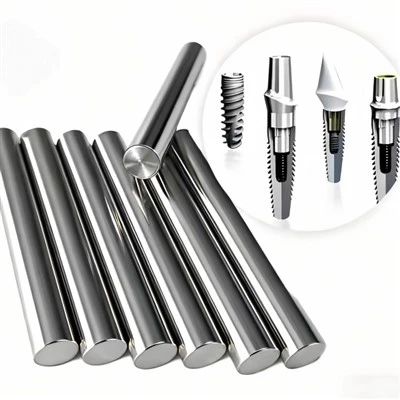
Pediatric dentistry orthopedic titanium implant material is made for smaller patients. Smaller implants. Thinner plates. Flexible wires. Less material in the body.
Dentistry: cleft palate. Missing teeth. Jaw reconstruction. Small dental implants.
Orthopedics: bone cysts. Fractures. Limb deformity. Growth guidance implants. Small screws. Thin plates.
Why children need different implants
Adults get standard size implants. 4.0mm dental implant. 4.5mm bone screw. 3.5mm plate.
A child's bone is smaller. A 7-year-old's femur is half the size of an adult's.
Adult implants are too big. Too much metal. Too stiff. May affect bone growth.
For pediatric dentistry orthopedic titanium implant material, smaller is better. Thinner. Shorter. Less stiff.
Which grade for pediatric use
| Grade | Material | Tensile | Best for |
| Grade 23 ELI | Ti-6Al-4V | 860 MPa | Small screws, implants, nails |
| Grade 4 CP | Pure Ti | 550 MPa | Thin plates, cranial, dental |
| Grade 1 CP | Pure Ti | 240 MPa | Flexible wires, cerclage |
Grade 23 ELI allows thinner implants. A 2.0mm screw in Grade 23 ELI is stronger than a 2.5mm screw in pure titanium. Less metal in the child.
Grade 4 CP for plates that need to be bent. Cranial plates. Jaw plates.
Grade 1 CP for wires that wrap around small bones.
For pediatric dentistry orthopedic titanium implant material, Grade 23 ELI is common for small load-bearing implants. Grade 4 CP for non-load-bearing. Grade 1 CP for wires.
Material specs (Grade 23 ELI)
| Property | Value |
| Standard | ASTM F136 |
| Tensile (min) | 860 MPa |
| Yield (min) | 795 MPa |
| Elongation | ≥ 10% |
| Density | 4.43 g/cm³ |
| Nickel | 0% |
Pediatric dentistry applications
-
Cleft palate repair. Bone graft needs support. Small titanium mesh. Grade 4 CP plate. 0.3mm to 0.5mm thick. Cut to shape.
-
Dental implant for missing tooth. Child has smaller jaw. 2.5mm to 3.0mm diameter implant. Grade 23 ELI rod.
-
Space maintainer. Wire loop to hold space for permanent tooth. Grade 1 CP wire. 0.8mm to 1.0mm. Bent by orthodontist.
-
Orthodontic mini-screw. Temporary anchorage. 1.5mm to 2.0mm diameter. Grade 23 ELI.
-
For pediatric dentistry orthopedic titanium implant material, everything is smaller. Thinner. Lighter.
Pediatric orthopedics applications
Craniofacial plate. Skull defect. Very thin plate. 0.4mm to 0.6mm. Grade 4 CP. Contoured during surgery.
Growth guidance implant. For limb deformity. Small plate with screws. Grade 23 ELI. 1.5mm to 2.0mm thick.
Bone cyst filler. Needle decompression. Small cannulated screw. 3.0mm outer diameter. Grade 23 ELI. Hollow.
Fracture fixation. Small bone. Wrist. Ankle. Foot. 2.0mm screw. Grade 23 ELI. Thin plate. 1.0mm thick.
Cerclage wire. Around small bone fragments. Grade 1 CP wire. 0.8mm to 1.0mm. Flexible.
For pediatric dentistry orthopedic titanium implant material, implants must be removed sometimes. Growing bone may need a larger implant later. Or the implant may be left. Either way, titanium is safe.
Small diameter rods
Pediatric implants are small. A 2.5mm dental implant. A 2.0mm bone screw.
Rod diameter matches implant size.
| Implant | Rod diameter |
| Mini dental implant | 2.5mm |
| Small bone screw | 2.0mm – 2.5mm |
| Orthodontic mini-screw | 1.5mm |
| Growth guidance screw | 3.0mm |
For pediatric dentistry orthopedic titanium implant material, we supply small diameter rod down to 1.0mm.
Thin plates
Pediatric plates are thin. Less metal. Less stiffness. More contouring.
| Application | Plate thickness |
| Cranial plate | 0.4 – 0.6mm |
| Jaw plate | 0.5 – 0.8mm |
| Growth guidance plate | 1.0 – 1.5mm |
| Fracture plate (small bone) | 0.8 – 1.0mm |
Grade 4 CP is common for thin plates. Pure titanium. Easy to bend. No springback.
Flexible wires
Pediatric cerclage wraps around small bones. Thin wire. Flexible.
Grade 1 CP wire.
| Application | Wire diameter |
| Small bone cerclage | 0.8mm |
| Sternal closure (pediatric) | 0.6mm |
| Space maintainer | 0.8mm – 1.0mm |
Wire must bend without cracking. Grade 1 CP passes twist test. 10 twists. No cracks.
Why remove or not remove pediatric implants
Some surgeons remove implants after bone heals. Child is still growing. Implant may become too small or too stiff.
Some surgeons leave them. Titanium is safe. No corrosion. No long-term issues.
For pediatric dentistry orthopedic titanium implant material, both approaches work. The material is biocompatible either way.
Surface finish
Pediatric implants contact growing tissue. Smooth surface is important.
Polished. Ra ≤ 0.2μm. Standard.
Electropolished. Ra ≤ 0.05μm. For implants near nerves or vessels.
For pediatric dentistry orthopedic titanium implant material, smooth surface reduces inflammation.
Traceability
Pediatric implants are medical devices. Full traceability required.
Every pediatric dentistry orthopedic titanium implant material rod, wire, or plate comes with:
Heat number. Mill test report. ASTM F136 or F67 cert. Chemical analysis. Mechanical test results.
EN 10204 3.1 standard. 3.2 available.
FAQ
Q: Grade 23 ELI or Grade 4 for small bone screw?
A: Grade 23 ELI. Small screw needs high strength. 860 MPa vs 550 MPa. Thinner screw for the same strength.
Q: What diameter for a mini dental implant?
A: 2.5mm to 3.0mm. Child's jaw is smaller than adult's. 4.0mm is too big.
Q: What thickness for a cranial plate?
A: 0.4mm to 0.6mm. Skull is thin. No weight bearing. Thin plate contours easily.
Q: Can you supply very small wire?
A: Yes. 0.5mm diameter wire available. For fine cerclage and sutures.
Q: Do you cut to length?
A: Yes. Rods cut to your screw length. Plates cut to your shape. Wires cut to your suture length.
Q: Lead time?
A: Stock sizes 7-10 days. Custom sizes 3-5 weeks.
Q: Sample material?
A: Yes. Small sample. Pay shipping. Material free. Credit back on production order.
The bottom line
Children are not small adults. Their implants need to be smaller. Thinner. Less stiff.
Pediatric dentistry orthopedic titanium implant material gives you that.
Grade 23 ELI for small strong screws. Grade 4 CP for thin bendable plates. Grade 1 CP for flexible wires.
Rod. Wire. Plate.
For cleft palate repair. For small bone fractures. For growth guidance. For dental implants.
Smaller for smaller patients. Safe for growing bones.
Contact
Need a quote on pediatric dentistry orthopedic titanium implant material? Tell us the application, form (rod, wire, plate), dimensions, quantity, and grade. We'll reply within 24 hours.
Email: kristy@mt-titanium.com
WhatsApp: +86-17391509251
Hot Tags: pediatric dentistry orthopedic titanium implant material, China pediatric dentistry orthopedic titanium implant material manufacturers, suppliers, factory, dentistry orthopedic, dentistry&orthopedic, medical titanium, Orthopedic Dentistry Titanium Material, Osseointegration Titanium Implant Dentistry Orthopedic, Pediatric Dentistry Orthopedic Titanium Implant Material