

What biocompatibility means
The body accepts the material. No rejection. No inflammation. No toxic reaction.
Titanium does this better than almost any other metal.
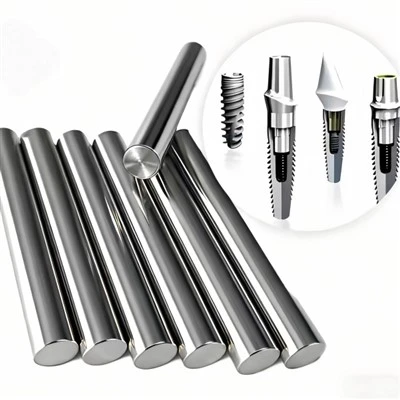
High biocompatibility titanium for dentistry orthopedic surgery is made for implants that stay in the body. Dental fixtures. Bone screws. Spinal rods. Cranial plates. The patient lives with it for years. Sometimes forever.
The oxide layer on titanium is stable. The body doesn't attack it. Bone grows right up to it.
Why titanium is highly biocompatible
Stainless steel contains nickel. Some patients react. Skin rash. Swelling. Implant failure.
Cobalt chrome releases metal ions over time. Some concern about long-term effects.
Titanium releases almost nothing. The oxide layer seals the surface. No ions. No corrosion. No allergic reactions.
For high biocompatibility titanium for dentistry orthopedic surgery, the material is safe for long-term implantation.
Which grade for which surgery
| Grade | Material | Tensile | Best for |
| Grade 23 ELI | Ti-6Al-4V | 860 MPa | Dental implants, bone screws, spine |
| Grade 4 CP | Pure Ti | 550 MPa | Cranial plates, healing abutments |
| Grade 1 CP | Pure Ti | 240 MPa | Sutures, cerclage, orthodontic wires |
All three are highly biocompatible. No nickel. No toxicity. The difference is strength and form.
Grade 23 ELI for load-bearing implants. Strong. Small size.
Grade 4 CP for plates that need bending. Pure titanium. No aluminum. No vanadium.
Grade 1 CP for flexible wires. Soft. Easy to tie.
Material specs (Grade 23 ELI)
| Property | Value |
| Standard | ASTM F136 |
| Tensile (min) | 860 MPa |
| Yield (min) | 795 MPa |
| Elongation | ≥ 10% |
| Density | 4.43 g/cm³ |
| Nickel | 0% |
Dentistry surgery applications
Dental implant fixture. Goes into the jawbone. Osseointegrates. Permanent. Grade 23 ELI rod. 3.0mm to 5.0mm diameter.
Abutment. Connects fixture to crown. Visible in the mouth. Grade 23 ELI. Polished or anodized.
Healing abutment. Temporary. Shapes the gum. Grade 4 CP. Removed later.
Dental mesh. Bone graft support. Thin plate. Grade 2 or Grade 4. 0.3mm to 0.6mm.
For high biocompatibility titanium for dentistry orthopedic surgery, the material must be safe for long-term contact with gum tissue and bone.
Orthopedic surgery applications
Bone screw. Holds plates. Fixes fractures. Grade 23 ELI rod. 2.0mm to 8.0mm diameter.
Spinal rod. Spine fusion. Grade 23 ELI rod. 5.0mm to 6.5mm diameter. Pre-bent.
Cranial plate. Skull defect. Grade 4 CP plate. 0.5mm to 1.0mm thick. Contoured.
Cerclage wire. Around bone fragments. Grade 1 CP wire. 1.0mm to 1.5mm.
For high biocompatibility titanium for dentistry orthopedic surgery, the implant may stay forever. Biocompatibility is not optional.
Why no aluminum or vanadium
Grade 23 ELI contains aluminum and vanadium. Both are in the alloy for strength.
Some surgeons prefer pure titanium for certain applications. Cranial plates. Healing abutments. No aluminum. No vanadium.
Grade 4 CP pure titanium is still biocompatible. Tensile 550 MPa. Strong enough for non-load-bearing.
For high biocompatibility titanium for dentistry orthopedic surgery, you have a choice. Alloy for strength. Pure for maximum purity.
Surface effect on biocompatibility
Smooth surface is more biocompatible. Rough surface traps bacteria. Harder to clean.
| Finish | Ra | Biocompatibility |
| Polished | ≤ 0.2μm | Excellent |
| Electropolished | ≤ 0.05μm | Superior |
| Sandblasted | 1.0-2.0μm | Good (bone contact) |
| As-machined | 0.4-0.8μm | Acceptable |
For tissue contact, polished or electropolished is best. For bone contact, textured surface helps osseointegration.
For high biocompatibility titanium for dentistry orthopedic surgery, we supply polished. You add texture if needed.
Forms available
Rod. 1.0mm to 25.0mm diameter. For screws, implants, spinal rods.
Bar. Up to 50mm. For custom prostheses.
Wire. 0.1mm to 3.0mm. For sutures, cerclage, orthodontics.
Plate. 0.3mm to 6.0mm thick. For cranial, maxillofacial, trauma.
For high biocompatibility titanium for dentistry orthopedic surgery, we supply all forms.
Traceability
Dental and orthopedic implants are medical devices. Full traceability required.
Every high biocompatibility titanium for dentistry orthopedic surgery product comes with:
Heat number. Mill test report. ASTM F136 or F67 cert. Chemical analysis. Mechanical test results.
EN 10204 3.1 standard. 3.2 available.
FAQ
Q: Grade 23 ELI or Grade 4 for a dental implant?
A: Grade 23 ELI. Dental implants need strength. 860 MPa vs 550 MPa. Smaller implant for the same strength.
Q: Grade 23 ELI or Grade 4 for a cranial plate?
A: Grade 4. Cranium doesn't bear weight. Pure titanium is preferred. No aluminum. No vanadium.
Q: What surface finish is most biocompatible?
A: Electropolished. Ra ≤ 0.05μm. Smoothest. Least tissue irritation.
Q: Can pure titanium be used for load-bearing?
A: Yes but limited. Grade 4 CP is 550 MPa. Fine for foot, hand, cranial. Not for femur.
The bottom line
Biocompatibility is not a marketing term. It means the body accepts the implant.
High biocompatibility titanium for dentistry orthopedic surgery delivers that.
Grade 23 ELI for strength. Grade 4 CP for pure titanium. Grade 1 CP for flexible wire.
Rod. Wire. Plate. Bar.
For dental implants. For bone screws. For cranial plates. For spinal rods.
No nickel. No corrosion. No allergic reactions. Just safe, reliable titanium.
Contact
Need a quote on high biocompatibility titanium for dentistry orthopedic surgery? Tell us the application, form (rod, wire, plate), dimensions, quantity, and grade. We'll reply within 24 hours.
Email: kristy@mt-titanium.com
WhatsApp: +86-17391509251
Hot Tags: high biocompatibility titanium for dentistry orthopedic surgery, China high biocompatibility titanium for dentistry orthopedic surgery manufacturers, suppliers, factory, dentistry orthopedic, medical titanium, Orthopedic Dentistry Titanium Material, Osseointegration Titanium Implant Dentistry Orthopedic, Pediatric Dentistry Orthopedic Titanium Implant Material, Titanium Orthopedic Plate Dentistry Implant Fixture ASTM F67