

What osseointegration means
Bone grows directly onto titanium. No soft tissue in between. The implant becomes part of the skeleton.
That's osseointegration.
Osseointegration titanium implant dentistry orthopedic is made for this purpose. The material allows bone cells to attach. The oxide layer is bioactive. Bone likes it.
Dental implants rely on osseointegration. Hip and knee replacements rely on it. Spinal cages. Bone screws. Any implant that needs permanent fixation.
Why titanium osseointegrates
Not every metal does this. Stainless steel forms a fibrous layer around it. Bone doesn't attach directly.
Cobalt chrome is similar. The body walls it off.
Titanium forms a stable oxide layer. That layer bonds with bone. No rejection. No inflammation. Just integration.
For osseointegration titanium implant dentistry orthopedic, the surface chemistry matters as much as the strength.
Which grade for osseointegration
| Grade | Material | Tensile | Best for | Osseointegration |
| Grade 23 ELI | Ti-6Al-4V | 860 MPa | Load-bearing implants | Excellent |
| Grade 4 CP | Pure Ti | 550 MPa | Cranial, dental healing | Excellent |
| Grade 1 CP | Pure Ti | 240 MPa | Wires, mesh | Excellent |
All three osseointegrate. The difference is strength and form.
Grade 23 ELI is for dental fixtures, hip stems, spinal rods. High load. Small size.
Grade 4 CP is for cranial plates and healing abutments. Pure titanium. No aluminum.
Grade 1 CP is for cerclage wires and dental mesh. Soft. Formable.
For osseointegration titanium implant dentistry orthopedic, pick the grade based on strength needs. All will bond with bone.
Material specs (Grade 23 ELI)
| Property | Value |
| Standard | ASTM F136 |
| Tensile (min) | 860 MPa |
| Yield (min) | 795 MPa |
| Elongation | ≥ 10% |
| Density | 4.43 g/cm³ |
| Modulus | 110 GPa |
Chemical limits
| Element | Max |
| Oxygen | 0.13% |
| Iron | 0.25% |
| Carbon | 0.08% |
| Nitrogen | 0.05% |
| Hydrogen | 0.012% |
No nickel. Medical implant grade.
Forms for osseointegration implants
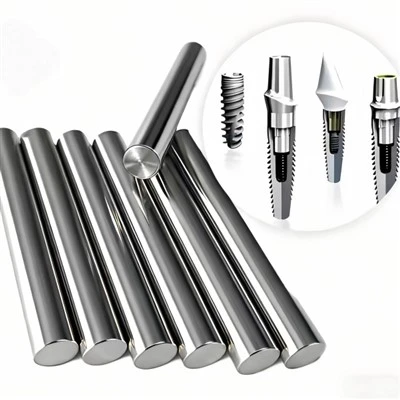
Rod. 1.0mm to 25.0mm diameter. For dental implants, bone screws, spinal rods.
Bar. Up to 50mm diameter. For custom prostheses.
Wire. 0.1mm to 3.0mm. For cerclage, cables, sutures.
Plate. 0.5mm to 6.0mm thick. For cranial, maxillofacial, trauma.
For osseointegration titanium implant dentistry orthopedic, we supply all forms.
Dentistry applications
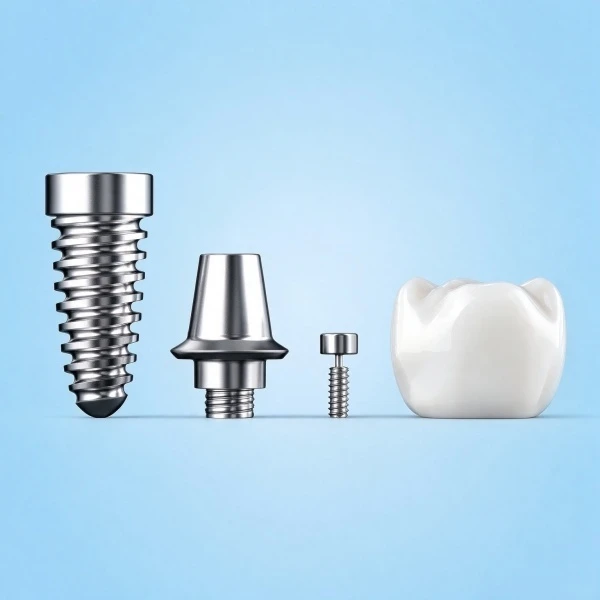
Dental implant fixture. Goes into the jawbone. Osseointegrates over 3-6 months. Grade 23 ELI rod. 3.0mm to 5.0mm diameter. Textured surface for bone growth.
Abutment. Connects fixture to crown. Grade 23 ELI. Polished or anodized.
Healing abutment. Temporary. Shapes the gum. Grade 4 CP. Lower cost.
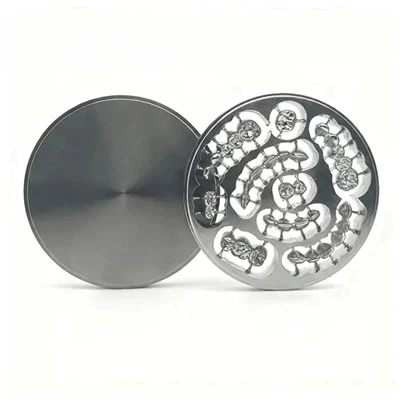
Dental mesh. Bone graft support. Grade 1 or Grade 2 plate. 0.3mm to 0.6mm thick. Laser cut.
The fixture must osseointegrate. The abutment just needs to be biocompatible.


Orthopedics applications
-
Hip stem. Goes into the femur. Osseointegrates for biological fixation. Grade 23 ELI. Textured or coated surface.
-
Spinal cage. Between vertebrae. Osseointegrates for fusion. Grade 23 ELI. Porous structure.
-
Bone screw. Holds plates. Osseointegration helps long-term stability. Grade 23 ELI.
-
Cranial plate. Skull defect. Grade 4 CP. Bone grows to the surface.
-
Cerclage wire. Wraps around bone fragments. Grade 1 CP. Flexible. Bone grows over it.
-
For osseointegration titanium implant dentistry orthopedic, the surface matters as much as the material.
Surface texture for osseointegration
Smooth surface osseointegrates. But textured surface osseointegrates faster. Stronger bond.
| Surface type | Method | Osseointegration rate |
| Polished | Mechanical | Good |
| Electropolished | Electrochemical | Good |
| Sandblasted | Grit blast | Better |
| Acid etched | Chemical | Better |
| Plasma sprayed | Porous coating | Best |
| Anodized | Voltage | Good |
Dental implants often use sandblasted and acid etched (SLA). Hip stems use plasma spray.
We supply polished rod. You apply your proprietary surface treatment. Your process. Your IP.
Bone growth factors
Osseointegration happens naturally. Titanium's oxide layer is enough.
Some implants add coatings to accelerate growth. Hydroxyapatite. BMP. Collagen.
These go on after machining. The base material is still titanium. Still medical grade.
For osseointegration titanium implant dentistry orthopedic, the substrate matters. Clean. Consistent. Traceable.
Precision for small implants
Dental implants are tiny. A 3.5mm fixture has tight tolerances.
| Parameter | Rod | Wire | Plate |
| Diameter | ±0.025mm | ±0.01mm | ±0.05mm |
| Straightness | 0.2mm/1000mm | 0.1mm/300mm | N/A |
| Surface | ≤ 0.2μm | ≤ 0.1μm | ≤ 0.2μm |
Small defects affect osseointegration. A scratch on the surface is a place for bacteria. Or a stress riser.
Why no nickel
Nickel can cause allergic reactions. Skin rash. Inflammation around the implant. Implant failure.
Stainless steel has 10-14% nickel. Not for osseointegration. The body doesn't accept it the same way.
Titanium has 0% nickel. Safe. Bioactive. The body accepts it.
For osseointegration titanium implant dentistry orthopedic, nickel-free is not optional. It's required.
Traceability
Osseointegration implants are Class III medical devices. Highest risk. Highest scrutiny.
Every osseointegration titanium implant dentistry orthopedic comes with:
Heat number. Mill test report. ASTM F136 or F67 cert. Chemical analysis. Mechanical test results.
EN 10204 3.1 standard. 3.2 with third-party witness.
FAQ
Q: Grade 23 ELI or Grade 4 for dental fixture?
A: Grade 23 ELI. Fixtures are small. Need high strength. Grade 23 ELI gives 860 MPa. Grade 4 is 550 MPa.
Q: Grade 23 ELI or Grade 4 for cranial plate?
A: Grade 4. Cranium doesn't bear weight. Pure titanium. No aluminum. No vanadium.
Q: What surface finish for osseointegration?
A: Polished base. Then you add texture. SLA. Plasma spray. Your process.
Q: What form for spinal cage?
A: Rod or bar. Machined into cage shape. Hollow or solid. Porous coating added.
Q: Can you supply cut-to-length?
A: Yes. Rods cut to your length. Plates cut to your shape.
The bottom line
Bone grows to titanium. That's osseointegration. That's why we use it.
Osseointegration titanium implant dentistry orthopedic gives you the material.
Grade 23 ELI for strength. Grade 4 CP for pure titanium. Grade 1 CP for wire.
Rod. Bar. Wire. Plate.
For dental fixtures. For hip stems. For spinal cages. For cranial plates.
Bone likes it. Patients heal. Implants last.
Contact
Need a quote on osseointegration titanium implant dentistry orthopedic? Tell us the application, form (rod, wire, plate), dimensions, quantity, and grade. We'll reply within 24 hours.
Email: kristy@mt-titanium.com
WhatsApp: +86-17391509251
Hot Tags: osseointegration titanium implant dentistry orthopedic, China osseointegration titanium implant dentistry orthopedic manufacturers, suppliers, factory, dentistry orthopedic, dentistry&orthopedic, medical titanium, Orthopedic Dentistry Titanium Material, Osseointegration Titanium Implant Dentistry Orthopedic, Titanium Orthopedic Plate Dentistry Implant Fixture ASTM F67