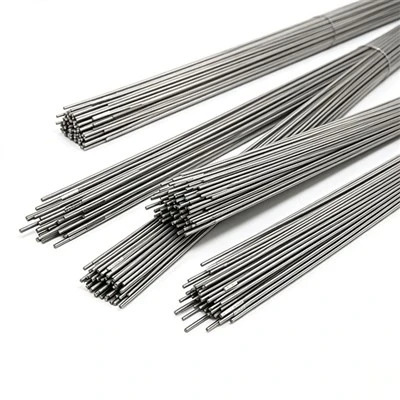


What this wire is for
3D printing with titanium is different from machining it. You're not cutting metal away. You're building it up, layer by layer.
Titanium alloy wire for industrial 3D printing feeds into WAAM (Wire Arc Additive Manufacturing) or LMD (Laser Metal Deposition) systems. The wire melts. The machine moves. A part grows.
Aerospace companies use it to print structural brackets. Oil and gas firms print valve bodies. Marine shops print propeller components. Anywhere you need a complex titanium part and don't want to machine it from solid bar.
Why wire, not powder
Most titanium 3D printing uses powder. Fine powder. Expensive powder. Dangerous powder (flammable).
Wire is different. Cheaper per kilo. No explosion risk. Higher deposition rate - wire prints faster than powder. No powder handling equipment needed. No closed-loop glove boxes.
The trade-off? Lower resolution. Wire prints aren't as detailed as powder prints. But for large parts - brackets, housings, structural components - wire is faster and cheaper.
Titanium alloy wire for industrial 3D printing gives you the speed and safety of wire with the material properties of forged titanium.
Technical specs
| Property | Grade 5 | Grade 23 (ELI) |
| Standard | AMS 4954 | AMS 4956 |
| Material | Ti-6Al-4V | Ti-6Al-4V ELI |
| Density | 4.43 g/cm³ | 4.43 g/cm³ |
| Tensile (as-printed) | ~900–1000 MPa | ~860–950 MPa |
| Yield (as-printed) | ~800–900 MPa | ~760–860 MPa |
| Elongation | 8–12% | 10–15% |
| Oxygen (max) | 0.20% | 0.13% |
- Diameter options
0.8mm, 1.0mm, 1.2mm, 1.6mm.
Tolerance: ±0.03mm. - Spool sizes
5kg, 10kg, 15kg, 20kg. Custom available.
Grade 5 vs Grade 23 (ELI)
Both are Ti-6Al-4V. Same basic chemistry. Different oxygen limits.
Grade 5 has higher oxygen (0.20% max). Higher strength. Slightly lower ductility. Fine for most industrial 3D printing.
Grade 23 (ELI - Extra Low Interstitial) has lower oxygen (0.13% max). Lower strength. Higher ductility. Better fatigue life. Required for medical implants and some aerospace parts.
For titanium alloy wire for industrial 3D printing, Grade 5 covers most jobs. Grade 23 is for high-fatigue or medical applications.
Where this wire gets used
Feed a spool of titanium alloy wire for industrial 3D printing into a WAAM system. You can print:
- Aerospace brackets and fittings. Complex shapes. Low volume. Expensive to machine from billet.
- Pressure vessels and housings. Near-net shape. Finish machine after printing.
- Marine propeller components. Corrosion resistant. Lightweight.
- Medical implants (Grade 23). Custom shapes for individual patients.
- Spare parts for remote locations. Print on site instead of stocking spares.
Each of these parts would take hours or days to machine from solid bar. Wire 3D printing cuts that to hours. Less waste. Faster turnaround.
Wire requirements for 3D printing
Not every titanium wire works for additive manufacturing.
Titanium alloy wire for industrial 3D printing needs:
- Tight diameter tolerance. Your feeder won't jam. ±0.03mm or better.
- Clean surface. No oxide. No oil. Contamination causes porosity in the printed part.
- Consistent cast and helix. Wire feeds straight without tangling.
- Precision winding. Layer on layer. No cross-laps. No birdnesting.
We supply wire on clean spools with edge control. Every spool gets inspected before it leaves.
Printing parameters - short version
WAAM uses an arc (like welding) to melt wire. Layer by layer. Robot or gantry moves the torch.
Typical settings:
Wire feed speed: 2–5 m/min
Travel speed: 0.3–0.8 m/min
Current: 150–250A
Voltage: 15–22V
Shielding gas: Pure argon, 15–25 L/min
Layer thickness: 1–3mm per pass.
Finish machine after printing to final tolerance.
For titanium alloy wire for industrial 3D printing, post-print heat treatment is common. Stress relieve at 650–700°C for 1–2 hours. Improves ductility and stabilizes properties.
Post-processing
Printed titanium parts aren't ready to use straight off the machine.
You'll need to:
Stress relieve (650–700°C, 1–2 hours). Removes residual stress from the print process.
Machine critical surfaces. Printed surfaces are rough. Bore holes. Face flanges.
HIP (Hot Isostatic Pressing) for high-end applications. Closes internal porosity. Improves fatigue life. Not required for most parts.
Our wire is optimized for printability. But the final part properties depend on your print parameters and post-processing.
FAQ
Q: What's the difference between AMS 4954 and AMS 4956?
A: AMS 4954 is Grade 5. AMS 4956 is Grade 23 ELI. Lower oxygen. Higher ductility. Better fatigue. Use AMS 4956 for medical implants and critical aerospace fatigue parts.
Q: Can I use welding wire for 3D printing?
A: Sometimes. But welding wire has looser tolerances. May not feed reliably in a 3D printer. Our wire is specifically made for additive - tighter diameter, cleaner surface, precision winding.
Q: What's the as-printed tensile strength?
A: Grade 5: ~900–1000 MPa. Grade 23: ~860–950 MPa. Depends on your print parameters. Heat treatment changes properties.
Q: Lead time for additive wire?
A: Stock diameters (1.0mm, 1.2mm) ship in 7–10 days. Non-stock diameters (0.8mm, 1.6mm) take 3–4 weeks.
The bottom line
You don't buy titanium alloy wire for industrial 3D printing because it's cheap. You buy it because complex titanium parts are expensive to machine. Because powder systems are dangerous and slow. Because you need a faster way to make small batches of high-value parts.
Grade 5 for most jobs. Grade 23 for medical and high-fatigue.
Tight tolerance. Clean surface. Precision wound. That's what additive manufacturing needs.
Contact
Need a quote on titanium alloy wire for industrial 3D printing? Send diameter, grade (Gr5 or Gr23), spool size (kg), and any certification requirements. We'll reply within 24 hours.
Email: kristy@mt-titanium.com
WhatsApp: +86-17391509251
Hot Tags: titanium alloy wire for industrial 3d printing, China titanium alloy wire for industrial 3d printing manufacturers, suppliers, factory, Annealed Titanium Wire for Industrial Spring Making, High Tensile Titanium Wire for Aerospace Cables, Titanium Wire ASTM B863 Industrial Grade, Titanium Wire for Chemical and Electrolysis Industry, Titanium Wire for Electronic and Electrical Industry, Titanium Wire for Marine Aquaculture Equipment