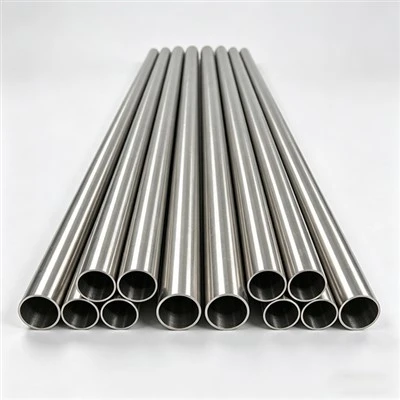


What it is
Performance exhaust systems need to be light. Strong. Heat resistant. Stainless steel works. But stainless is heavy. Mild steel rusts.
Thin wall titanium tube for automotive exhaust systems is the answer. Lightweight. Thin wall. 0.5mm to 1.5mm. Cuts weight compared to stainless. Handles exhaust heat. Never rusts.
Aftermarket exhausts. Race cars. Motorcycles. High-end sports cars. Anywhere weight matters and exhaust gas is hot.
Why titanium for exhaust
Stainless steel exhaust weighs about 7.9 g/cm³. Titanium is 4.5 g/cm³. A titanium exhaust is almost half the weight of stainless.
Stainless also rusts over time. Not fast. But it does. Titanium doesn't rust. Ever.
Heat resistance. Exhaust gas can hit 600°C near the engine. Titanium handles it. The oxide layer darkens. Turns gold. Then blue. But the metal stays strong.
For thin wall titanium tube for automotive exhaust systems, weight savings are the main reason people switch.
Wall thickness matters
Typical stainless exhaust tube is 1.2mm to 1.5mm wall. Some heavier.
Titanium is stronger by weight. You can use thinner wall. 0.5mm for low pressure sections. 0.8mm for mid sections. 1.2mm near the engine.
| Wall thickness | Use |
| 0.5mm | Mufflers, tail pipes (low heat) |
| 0.8mm | Mid pipes |
| 1.0mm | Downpipes, headers (high heat) |
| 1.2mm | Turbo connections |
| 1.5mm | Extreme heat, heavy duty |
Thinner wall means less weight. Less material cost.
Material specs (Grade 2)
| Property | Value |
| Tensile (min) | 345 MPa |
| Yield (min) | 275 MPa |
| Elongation | ≥ 20% |
| Density | 4.51 g/cm³ |
| Melting point | 1670°C |
| Max continuous temp | 300°C (in air) |
Exhaust gas is hotter than 300°C. But the tube surface is cooler. Air cooling helps. Titanium works fine.
Common diameters for exhaust
| OD (mm) | Typical use |
| 25 – 35 | Motorcycle headers |
| 38 – 45 | Car downpipes |
| 50 – 60 | Mid pipes |
| 60 – 70 | Main exhaust |
| 70 – 80 | Large diameter systems |
| 80 – 100 | Turbo back, custom |
Where it goes
-
Headers. Collect exhaust from engine cylinders. High heat. 1.0mm to 1.2mm wall. Welded sections.
-
Downpipes. From turbo or header to mid pipe. 0.8mm to 1.0mm.
-
Mid pipes. Center section. 0.8mm.
-
Mufflers. Rear of the car. Lower heat. 0.5mm to 0.8mm. Titanium mufflers save significant weight.
-
Tail pipes. Visible part. Polished finish. 0.5mm.
For thin wall titanium tube for automotive exhaust systems, the tube is bent. Welded. Polished. Then bolted onto the car.
Weight comparison
A stainless steel exhaust system for a sports car weighs about 25kg. Same system in titanium weighs about 12-15kg.
That's 10-13kg saved. On a performance car, unsprung weight or rotating mass is critical. Exhaust is neither, but any weight reduction helps.
For thin wall titanium tube for automotive exhaust systems, weight savings are real and measurable.
Heat colors
Titanium changes color with heat. Near the engine, the tube turns gold. Further back, blue. At the tail, silver.
Some people like this. It's a signature look for titanium exhausts.
The color is oxide thickness. Not a problem. Does not weaken the metal.
Bending titanium tube
Titanium bends differently than stainless. More springback. Requires a mandrel bender.
| Wall thickness | Bendability |
| 0.5mm | Easy. Tight bends possible. |
| 0.8mm | Good. Standard radii. |
| 1.0mm | Needs care. Larger radii. |
| 1.2mm | Difficult. Heat bending helps. |
For thin wall titanium tube for automotive exhaust systems, we supply straight tube. You bend or we pre-bend.
Welding titanium exhaust
Titanium welds with TIG. Argon shielding required. Inside and outside.
Back purge is critical. No purge = bad weld.
Use ERTi-2 filler. Thin wall needs careful heat control.
Weld color should be silver or light straw. Blue or purple means bad shielding. Do not use.
For thin wall titanium tube for automotive exhaust systems, welded joints are common. Flanges. Slip joints. V-band clamps.
Why not steel or stainless
Mild steel exhaust rusts. From the inside out. Pinholes develop. Noise leaks. Replacement needed every few years.
Stainless steel lasts longer. But stainless is heavy. And in salt climates, stainless welds can rust.
Titanium doesn't rust. Not on the weld. Not on the tube. Not anywhere.
For thin wall titanium tube for automotive exhaust systems, you install it once.
Sound characteristics
Titanium exhausts sound different than stainless. Higher pitch. More crisp. Some say sharper.
The thin wall contributes. Thinner metal vibrates differently.
Many performance drivers prefer the titanium sound.
Cost vs stainless
Stainless exhaust is cheaper. A stainless system for a sports car might cost $1000-$2000. Titanium system: $3000-$6000.
Why pay more? Weight savings. Corrosion resistance. The look. The sound.
For race cars, every kilogram counts. For street cars, it's a premium upgrade.
Flanges and hardware
Titanium tube needs titanium flanges. Or stainless flanges with titanium gaskets.
Fasteners. Use titanium bolts or high-grade stainless. Avoid galvanic corrosion between titanium and mild steel.
We supply tube only. Flanges and hardware available on request.
Polishing
Exhaust tips are polished. Mirror finish. Shows off the titanium.
We supply tube as-welded or pickled. Polishing is done by exhaust fabricator.
FAQ
Q: What wall thickness for a turbo back exhaust?
A: 1.0mm for the downpipe near the turbo. 0.8mm for the rest. 0.5mm for the muffler.
Q: Can I bend 0.5mm tube by hand?
A: No. Use a tube bender. Hand bending will kink thin wall tube.
Q: What color will my exhaust turn?
A: Gold and blue near the engine. Silver toward the back. Each exhaust colors differently.
Q: Can I weld titanium with my TIG welder?
A: Yes. Same equipment. Need argon back purge. Practice first.
The bottom line
Factory exhausts are steel. Heavy. Rusts. Performance exhausts are stainless. Lighter. Still heavy.
Thin wall titanium tube for automotive exhaust systems is the next level.
Half the weight of stainless. Thinner wall. Never rusts.
Headers. Downpipes. Mid pipes. Mufflers. Tail pipes.
For race cars. For sports cars. For motorcycles.
Lighter. Stronger. Better sounding.
Contact
Need a quote on thin wall titanium tube for automotive exhaust systems? Tell us OD, wall thickness, length, quantity. We'll reply within 24 hours.
Email: kristy@mt-titanium.com
WhatsApp: +86-17391509251
Hot Tags: thin wall titanium tube for automotive exhaust systems, China thin wall titanium tube for automotive exhaust systems manufacturers, suppliers, factory, Corrosion Resistant Titanium Tube for Petrochemical Industry, Large Diameter Titanium Tube for Industrial Reactors, Seamless Titanium Tube for Industrial Heat Exchangers, Titanium Alloy Tube for Aerospace Hydraulic Systems, Titanium Tube for Marine and Offshore Drilling, Welded Titanium Tube for Industrial Cooling Systems